Data Analysis in a Research Paper: How We Apply Methods and Reporting Standards
The evaluation of a data analysis research paper depends heavily on methodological accuracy. Accurate data analysis is essential; even minor errors can lead to revisions, rejection, or the results being deemed unreliable. This blog provides researchers with practical guidance on how data analysis is applied in a research paper, helping ensure clarity, rigor, and credibility. Our goal is to make the process understandable. We explore how data analysis supports research objectives, what reviewers expect from this section, and how researchers can present their findings in a way that is both accurate and academically sound.
Role of Data Analysis in a Research Paper
Data analysis is the link between the design and the conclusion of the research or studies. Reviewers focus on the analysis as it is a key element in determining whether the research is credible or simply speculative in nature.
Data analysis for a research paper has three fundamental roles:
-
Validates research objectives by demonstrating that the chosen methods appropriately address the research questions.
-
Supports findings with measurable evidence, ensuring conclusions are grounded in data rather than opinion.
-
Connects methodology to results, showing logical consistency across the paper.
In peer review, this section is verified for its congruence with goals, appropriateness of analytical techniques, and accuracy of execution. Any disconnect in its association with data, technique, and conclusion evokes concern.
It is also important to differentiate among three stages that are frequently confused.
-
Data collection: Gathering raw information according to the research design.
-
Data analysis: Applying structured methods to examine and process the data.
-
Interpretation: Explaining what the analyzed results mean within the research context.
Types of Data Analysis Used in Research Papers
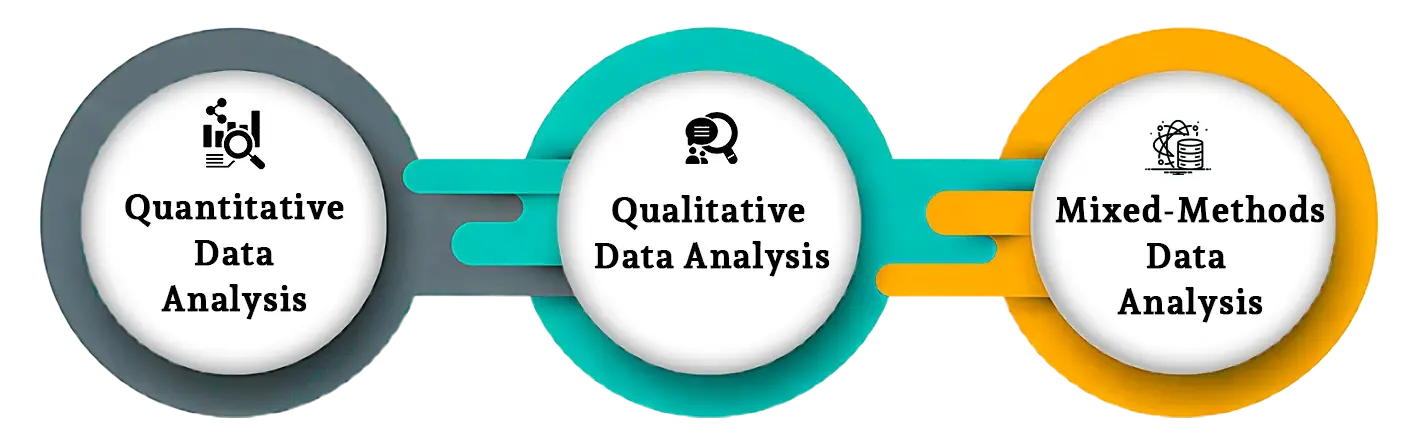
In research studies, the choice of method of analyzing the obtained research results is informed by the research question, the obtained research data, and the research objectives. When preparing a research paper on the process of soil analysis research paper, choosing the right method of research analysis is crucial for drawing valid and applicable research results.
Different research analyses are useful for different purposes; therefore, knowing the difference between the applicable research analyses gives the research results their most important interpretation.
Quantitative Data Analysis
Quantitative analysis is appropriate when research involves numerical data, measurable variables, or structured datasets. The goal is to extract meaningful insights rather than simply perform calculations. Common analytical purposes include:
-
Exploratory Data Analysis (EDA): Here, patterns, abnormalities, and relationships that are not intuitively obvious are determined.
Selecting the right statistical test is less about memorizing formulas and more about logic: the nature of the data, the relationships being studied, and the research objectives all guide this choice. For example, in a soil analysis research paper, comparing soil nutrient levels across regions may require different methods than predicting crop yields over time, but both are rooted in structured, logical reasoning.
Qualitative Data Analysis
While quantitative methods focus on numbers, qualitative analysis delves into meaning, patterns, and themes in non-numerical data. Such an analysis is thus particularly necessary in a study involving perceptions, behaviours, or contextual phenomena. The major methods of approach include coding and categorization, developing and validating themes, and attention to consistency and auditability.
Common qualitative techniques include:
-
Thematic analysis: Identifies and organizes recurring themes within data.
-
Content analysis: Systematically categorizes textual or visual content to reveal patterns.
-
Grounded theory: Develops theories directly from the data rather than applying pre-existing frameworks.
-
Narrative analysis: Explores stories and personal accounts to uncover deeper insights.
Qualitative software tools can assist in organizing and tracking data, but they do not replace careful judgment or methodological rigor.
Mixed-Methods Data Analysis
In data analysis, the use of mixed methods is a technique of data analysis that combines some aspects of both quantitative and qualitative analysis. The integration of the two approaches is valid when a single methodology is unable to accomplish the analysis of purpose of the research conducted. When we talk of mixed method analysis, the key thing is to carefully combine both the quantitative and qualitative aspects of the research. Being quantitative means being measurable and objective; being qualitative means providing context and explanations. Together they paint a complete and believable picture.
Comparing Quantitative and Qualitative Components in Mixed-Methods Research
|
Aspect
|
Quantitative Component
|
Qualitative Component
|
How Integration Works/Justification
|
|
Purpose
|
Provides measurable, objective evidence; tests hypotheses
|
Provides context, explanation, and insight; explores experiences, patterns, and themes
|
Integration helps to justify the use of both methods since, separately, they are not able to fulfil the research aims adequately.
|
|
Data Type
|
Numerical, structured, measurable
|
Non-numerical, unstructured, descriptive
|
Quantitative results show "what happened," qualitative results reveal "why/how it happened"
|
|
Analysis Outcome
|
Statistical trends, correlations, generalizable results
|
Themes, patterns, narratives
|
Alignment ensures that quantitative trends are contextualized with qualitative insights, for a deeper understanding
|
|
Validation/Coherence
|
Reliability through replication and statistical rigor
|
Credibility through coding, theme validation, consistency checks
|
Triangulation verifies findings using both techniques, confirming their coherence and eliminating prejudice
|
|
Reporting
|
Objective presentation of numbers, tables, charts
|
Thematic or narrative summaries supported by evidence
|
Integration highlights contrasts as well as complementary strengths and presents a conclusion that is unified and strong, but not premature.
|
Data Analysis Process in a Research Paper
Our controlled process ensures accuracy and reproducibility, and gives us confidence that reviewers can trust our results.
Data Preparation and Cleaning
We always begin by validating and cleaning our data, making sure it is complete, accurate, and consistent before any analysis.
Our approach addresses:
Our documentation at this stage ensures full transparency and follows guidance from the importance of literature review in research on acceptable data management standards.
Selection of Data Analysis Techniques
Techniques are selected based on:
-
Research objectives
-
Data type (quantitative, qualitative, or mixed)
-
Sample size and structure
Common mistakes we avoid include mismatching methods to objectives, ignoring assumptions, and overcomplicating analysis without justification.
Execution of Data Analysis
We perform our analysis with suitable academic tools, making sure our results are accurate and reproducible. Our focus is on proper execution rather than the tools themselves.
Interpretation of Results
We carefully analyze our results and ensure we do not overstate them. Our interpretations remain aligned with our research objectives and adhere to all statistical and thematic limits.
Our Approach to Writing the Data Analysis Research Paper
Writing the data analysis section is all about clarity and structure. We focus on presenting results that align with our research objectives and methodology.
Step 1 – We Begin With the Research Objective
We shall commence each subsection by identifying the research aim or hypothesis, thereby keeping it in line with the method, as well as avoiding tables/output.
Step 2 – We Explain the Analysis Method Before Results
We also explain the analysis technique applied and state the rationale underlying the chosen technique, mentioning the software only when necessary.
Step 3 – We Present Results in a Structured Format
We will structure the results in an objective-wise or variable-wise fashion by using tables and figures; however, interpretation will remain separate at this stage.
Step 4 – We Report Findings Accurately
For quantitative results, we use consistent language, while, in the case of qualitative results, we use themes with evidence instead of using subjective language.
Step 5 – We Separate Results From Discussion
We keep the data analysis section strictly for findings, leaving interpretation and implications for the discussion to satisfy reviewer expectations.
How Our Data Analysis Research Support Works
Our research assistance supports researchers working with complex datasets and advanced statistical methods. We assist with quantitative, qualitative, and mixed-methods data analysis, including software-specific expertise in SPSS, R, Python, STATA, NVivo, and ATLAS.ti.
Support includes data cleaning and preparation, selection of appropriate analytical techniques, accurate interpretation of results, and preparation of tables, figures, and results aligned with journal standards.
Conclusion
Accurate data analysis research paper practices are essential to research credibility. Clear methodology, valid techniques, and ethical reporting determine whether findings are accepted or rejected. By maintaining structure, transparency, and analytical discipline and by seeking expert support when needed, researchers can produce data analysis sections that meet both academic and editorial expectations.



 By John