How to Present a Paper in a Conference – A Complete Academic Guide
How to present a paper in conference is a skill every researcher needs to master. It’s not just about reading your research aloud; conference presentations are a vital part of academic communication. Conference sessions provide a platform to share findings, engage in discussions, and gain feedback from peers. A successful presentation depends on thorough preparation, clarity of expression, and strict adherence to conference guidelines. Our experts can help researchers communicate their findings effectively, present their ideas clearly, and interact confidently with their peers.
A good presentation does not just happen; it requires planning, communication, and adherence to conference rules. A paper may be excellent, but it will not have much impact if it is not presented well.
This blog is a complete guide that will take you through the entire process, from understanding the purpose and requirements to choosing content, designing slides, and dealing with questions.
Purpose of Presenting a Paper in a Conference
Presenting a paper at a conference is not just a formality; it is an important aspect of academic development. Researchers and academics give their papers at conferences to share knowledge with fellow researchers, facilitate discussions, and obtain valuable feedback that can help enhance their research.
Conferences also provide an opportunity for academic discussion, helping presenters refine their ideas and address gaps they may not have noticed. Furthermore, giving papers at conferences can help with professional networking, which can help researchers network with other researchers in the future.
Learning how to write IEEE conference paper standards can further enhance the quality of the papers presented.
Understanding Conference Presentation Requirements
Every academic conference follows specific presentation requirements that presenters must follow. These requirements ensure consistency, fairness, and academic quality across sessions. Most conferences require the presenters to follow a certain format, keep to time, and be academically honest. Presentations are judged not only on the quality of the content but also on how well it is presented. This approach is similar to understanding how to write a review of a research paper, where systematic presentation is essential.
Originality and Contribution
-
Rather than dwelling on known concepts, the emphasis should be on new insights, methods, or results. The contribution should be clearly stated to enable the audience to appreciate why the research is important.
Time Limits and Session Structure
-
The presenter should carefully structure their presentation, prioritizing key points. A brief introduction, key results, and a conclusion are essential for effective time management.
Academic and Ethical Standards
Types of Conference Paper Presentations
Academic conferences typically use several presentation formats, and knowing the differences helps presenters prepare effectively. The main types are oral presentations, poster presentations, and virtual/online presentations.
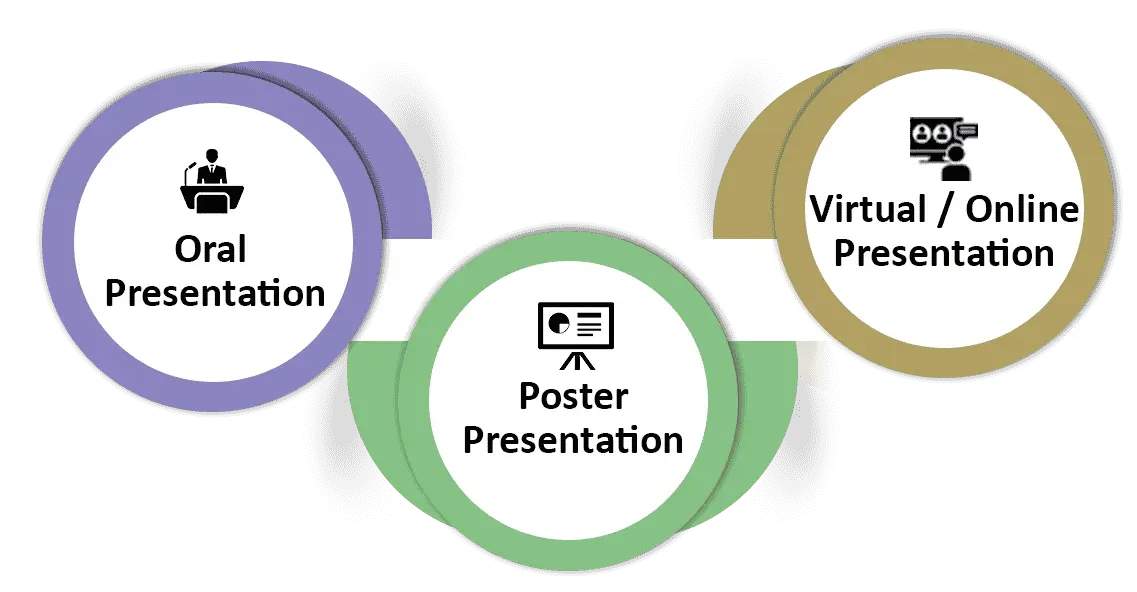
Each one has its duration, audience interaction, and technical needs. Choosing the right format helps presenters communicate research clearly, engage the audience, and make a strong impact.
Oral Presentation
The oral presentation will be for 10-15 minutes, and this will be followed by a short question-and-answer session. The presentation will be slide-based, and the slides should point out important points and not text.
The speaker should be able to engage the audience by using eye contact, gestures, and verbal cues. Rehearsals of pacing and transitions will help the speaker stay within time.
Poster Presentation
In poster presentations, large visual displays are used to present research, facilitating one-on-one interaction with the audience. This format is ideal for early-stage, exploratory, or concise studies. Posters should have clear visuals, organized layout, and concise text.
The researcher should be prepared to discuss the research in 2-3 minutes per visitor, highlighting the main objectives, methods, and important findings.
Virtual / Online Presentation
Virtual presentations can be live or recorded using platforms such as Zoom or Teams. The presenter should ensure that the internet connection is stable, the audio is clear, the lighting is adequate, and the screen is ready for sharing.
Interaction with the audience can be achieved through chat Q&A sessions, polls, or live conversations. The presentation and speech should be well coordinated, and practicing transitions before the actual presentation ensures a smooth flow of communication despite the online presentation.
Selecting Content from the Paper for Presentation
When presenting a research paper at a conference, it is important to distill the information into something that can be easily understood. The best way to do this is to focus on the most important aspects of the research, such as the problem, the methodology, and the findings. It is also important to avoid bogging down the audience with too much information.
Problem Statement and Objectives
Summarize your research problem in a few sentences that clearly state the purpose and significance of your research. Clearly state your objectives in a few sentences to ensure that the reader understands what your research aims to achieve. Do not add too much background or technical information.
Methodology Overview
Present your methodology clearly and concisely, emphasizing the most important steps, tools, or techniques. Use diagrams or flowcharts to simplify complex processes and focus on methods relevant to your findings.
Key Findings and Results
Highlight only the most important results that directly support your research objectives. Utilize graphs, charts, or tables to present your key findings effectively, highlighting important trends without cluttering your slides with too much information.
Preparing Presentation Slides for a Conference
Creating clear and professional slides is key for an academic audience. Keep it simple, organized, and emphasize key points. Choose readable fonts, avoid text, and format slides properly. Prepared slides will complement your speech, aid in the explanation of complex concepts, and make your research more understandable to the audience.
Slide Design and Readability
Design your slides using a clean layout and readable fonts. Use a proper font size and limit the amount of text to key points. This will make your slides easy to understand and visually attractive.
Tables, Figures, and Visuals
Use graphs, charts, and tables to communicate data effectively. Your visuals should reinforce your message and not dominate it, making difficult information easy to understand for your audience.
Common Mistakes to Avoid While Presenting a Paper in Conference
Even small errors can distract from your research. Being aware of common mistakes helps you communicate your work clearly and confidently.
-
Presenting from the slides or notes rather than interacting with the audience.
-
Using too much information on the slides, making them difficult to understand.
-
Speaking too quickly or too softly, which can impair comprehension.
-
Ignoring the time limit can cause rushed conclusions or unfinished presentations.
-
Failing to rehearse results in awkward transitions or forgotten points.
-
Neglecting to anticipate audience questions or interactions.
-
Using technical terms without explanation.
-
Poor design of the slides, including poor use of fonts, colors, and formatting.
Support Available for Conference Paper Presentation
Our conference paper writing services extend beyond the writing process to ensure that your presentation makes a lasting impact. We help with:
-
Research topic selection and refinement: Identifying relevant, impactful research topics aligned with current academic trends and conference themes.
-
Conference identification and topic alignment: Recommending suitable national and international conferences based on your research area, scope, and publication goals, while ensuring topic relevance to conference objectives.
-
Presentation preparation: Organizing information in a logical manner and emphasizing important findings.
-
Slide design: Designing effective and engaging slides to accompany your speech.
-
Language refinement: Refining language, voice, and rhythm to preserve professional tone.
-
General preparation: Providing advice on presentation delivery, timing, and audience interaction to enhance confidence.
With our support, you can approach your conference presentation fully prepared and well-equipped to communicate your research effectively.
Conclusion
Delivering an effective conference paper presentation requires careful preparation, clarity in communication, and structured delivery. You should communicate effectively and present your conference paper in an organized manner. Professional conference paper writing services, which can provide valuable support. With the right guidance and strategy, your conference paper can leave a lasting impression.


 By John