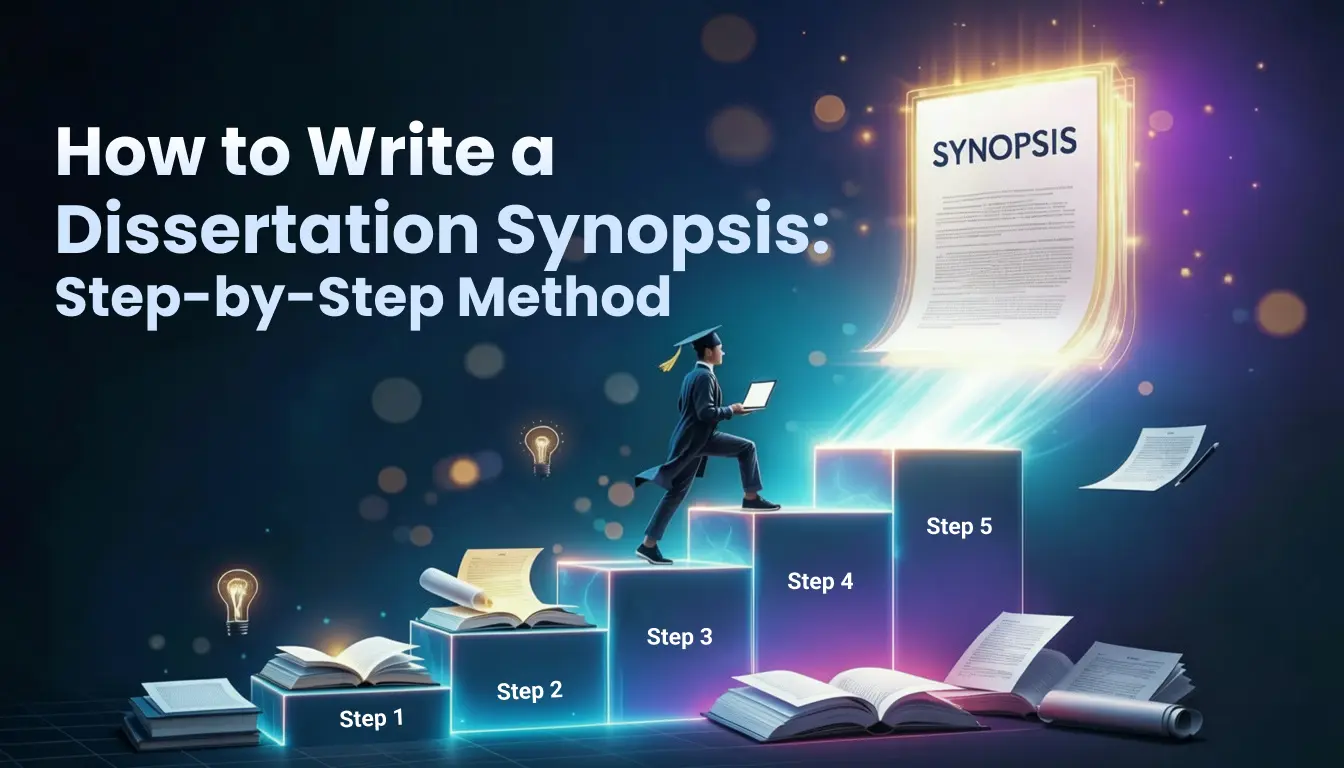
How to Write a Dissertation Synopsis: Step-by-Step Method
In this guide, you are going to learn the step-by-step process of how to write a synopsis for a dissertation. This step-by-step approach is not a generic or replicative format. It is actually the reflection of a structured methodology process followed by scholars and researchers across disciplines.
We notice that many students struggle with synopsis writing for a dissertation. These struggles start when they are unsure about the research idea and the presentation perspective of the research idea. We also find scholars struggle with structuring the synopsis and undergo confusion, rejection and revision.
This guide provides a practical workflow, helping you move from confusion to clarity, with clear steps, real academic expectations, and guidance on when expert support becomes valuable.
Step-by-Step Process: How to Write a Synopsis for a Dissertation
A well-defined synopsis acts as the foundation of the research. The area of research is completely focused on the academic standard of the synopsis. To attain this academically structured synopsis, every scholar must be aware of the question of how to write a synopsis for a dissertation. And he or she must know how one can align a dissertation synopsis from a logical and methodological perspective.
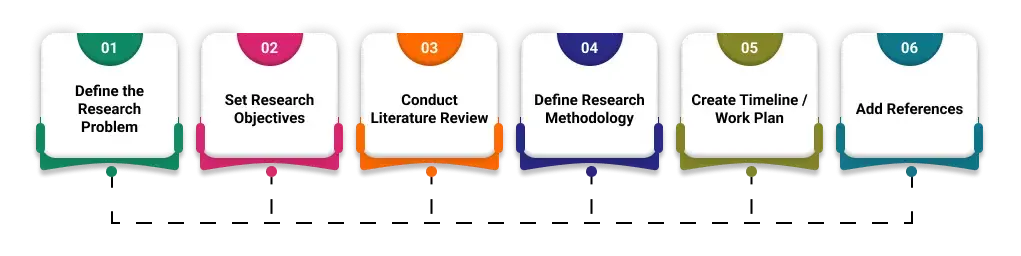
Step 1: Define the Research Problem
The most critical step in writing a synopsis for a dissertation is identifying a clear research problem. This defines the purpose and direction for your entire dissertation. A vague or broad problem statement can weaken your research from the beginning.
Scholars go through this step carefully by reading. They also undergo the process of examining the existing literature to find out what is being missed. This approach focuses on shaping a clear and meaningful research idea.
To structure this effectively:
-
Identify a genuine research gap in your domain
-
Refine your topic into a focused and manageable area
-
Explain the academic or real-world importance of the problem.
A clearly defined research problem strengthens your foundation when learning to write a synopsis for a dissertation.
Step 2: Set Research Objectives
Research objectives make your problems into actionable goals. They guide the direction of your study and ensure that every stage, including data analysis, remains intended with outcomes.
The intent of your research can be well developed with your research objectives. It helps you to improve clarity and helps evaluators quickly understand what your research is meant for.
Include:
-
Clearly defined primary objective
-
Two to four supporting objectives
-
Direct alignment with the research problem
Strong objectives ensure that your research remains focused and measurable.
Step 3: Conduct Literature Review
The core component of synopsis writing for a dissertation is the literature review section. This demonstrates the existing research and its background. This section helps you position your study within your academic landscape. It provides evidence for your research.
Best practices include:
-
Reviewing 20–50 high-quality research papers
-
Identifying limitations or gaps in existing studies
-
Highlighting key trends and theoretical perspectives
A well-structured literature review enhances and supports your research and synopsis.
Step 4: Define Research Methodology
A clear methodology explains how your research will be conducted. This step is crucial in mastering how to write a synopsis for a dissertation. The appropriate data collection and research methods demonstrate the strong methodology of the research which your area of study needs.
Key elements to include:
-
Research type (qualitative, quantitative, or mixed).
-
Data collection methods (surveys, interviews, experiments) .
-
Sampling techniques and population.
-
Tools and analytical techniques used.
In synopsis writing for a dissertation, a strong methodology builds structure and helps in maintaining your research to earn trust.
Step 5: Create Timeline / Work Plan
A well-defined work plan helps in planning and research discipline. It helps evaluators to make your study understandable within a timeframe.
Your work plan should include:
A structured timeline helps you meet deadlines and enhances the overall credibility of your research area.
Step 6: Add References
References are what help to validate your research and your research paper’s academic integrity. Proper citation ensures that all sources are acknowledged and that your work meets scholarly standards.
Follow these guidelines:
-
Use a recognised citation style, such as APA, MLA, or IEEE.
-
Maintain consistency throughout the document.
-
Use only the sources which are directly cited.
The trustworthiness of your research paper is completely based on the references.
Why Ondezx is the Best Choice for Writing a Synopsis for a Dissertation
A well-written synopsis often needs a theoretical understanding. It requires structured execution and academic precision. Ondezx synopsis writing services scholars with a research approach tailored to their requirements.
-
Free topics based on the domain – Helps scholars select relevant and researchable areas aligned with current trends
-
Customised synopsis support – Every synopsis is tailored to specific research objectives and academic standards
-
Research paper within 100 hours – Ensures timely delivery for urgent academic needs
-
Literature review with 50+ papers – Provides in-depth analysis and strong theoretical grounding
-
Human-written content- Maintains originality and academic authenticity
-
Expert PhD mentors – Guidance from experienced researchers with domain expertise
-
End-to-end support - Refers to the entire process, beginning with topic selection and ending with topic approval.
Synopsis writing for a dissertation is a crucial step that helps you present your research idea in a clear, structured, and academically sound manner.
Conclusion
It is critical to understand how to write a synopsis for a dissertation, particularly when developing a research topic. With proper planning and analysis, one can confidently present ideas on research.
At Ondezx, we collaborate with researchers to develop comprehensive research synopses which meet academic standards. You can contact us whenever you require assistance, and we will handle everything from that point forward.



 By John