How to Write Synopsis for Thesis: Advanced Guide for Research Scholars
If you are struggling with how to write synopsis for a thesis, take a little time and go through the step-by-step guide on 'How to Write a Synopsis for a Thesis: Advanced Guide for Research Scholars' to avoid common academic mistakes that many researchers make.
Writing a thesis synopsis can feel confusing when you are not sure how to structure each section or align your research objectives. Many scholars find it difficult to express their ideas clearly in a strong academic tone.
In such situations, getting expert guidance from professionals like us can help you approach the process more confidently. Our help indeed makes your work organised effectively, strengthens your research focus, and ensures your synopsis meets university expectations without unnecessary revisions.
What is a Thesis Synopsis? Understanding Its Academic Purpose
Before moving into the step-by-step guidelines on how to write synopsis for a thesis , it is essential to first understand what a thesis synopsis is and why it plays a crucial role in research.
A thesis synopsis is the academic document that outlines the research problem, objectives, methodology, and expected outcomes, which helps in a structured overview of the entire study for evaluation.
A synopsis differs from a research proposal and an abstract in its purpose and scope. A research proposal presents a detailed plan for conducting the research study, and an abstract is a summarisation of the completed research. The difference is that a thesis synopsis is a brief, structured preview of the intended research study.
Core Objectives of a Strong Thesis Synopsis:
A well-written synopsis provides a clear picture of your research idea in a structured way. It serves as the foundation for your research. A strong thesis synopsis ensures your research thesis is academically aligned. It allows the evaluators to quickly understand the purpose, significance, and feasibility.
Communicate Research Intent
The thesis synopsis should effectively convey the research with clarity and a well-defined focus. The synopsis should add value and help you advance knowledge in your subject area.
Demonstrate Originality and Research Gap
The thesis synopsis should highlight the originality of your study by clearly representing the gaps in the existing research. The purpose of the synopsis is to address the gaps and contribute new insights to the field.
Showcasing Feasibility and Methodology
The thesis synopsis should explain how the research will be conducted using appropriate methods and tools. It should demonstrate whether the study is practical, achievable, and well planned.
Align with Academic and Institutional Expectations
The thesis synopsis must be prepared in line with institutional standards and academic expectations. This should meet academic requirements in terms of structure, formatting and research quality.
Step-by-Step Method: How to Write Synopsis for Thesis Effectively
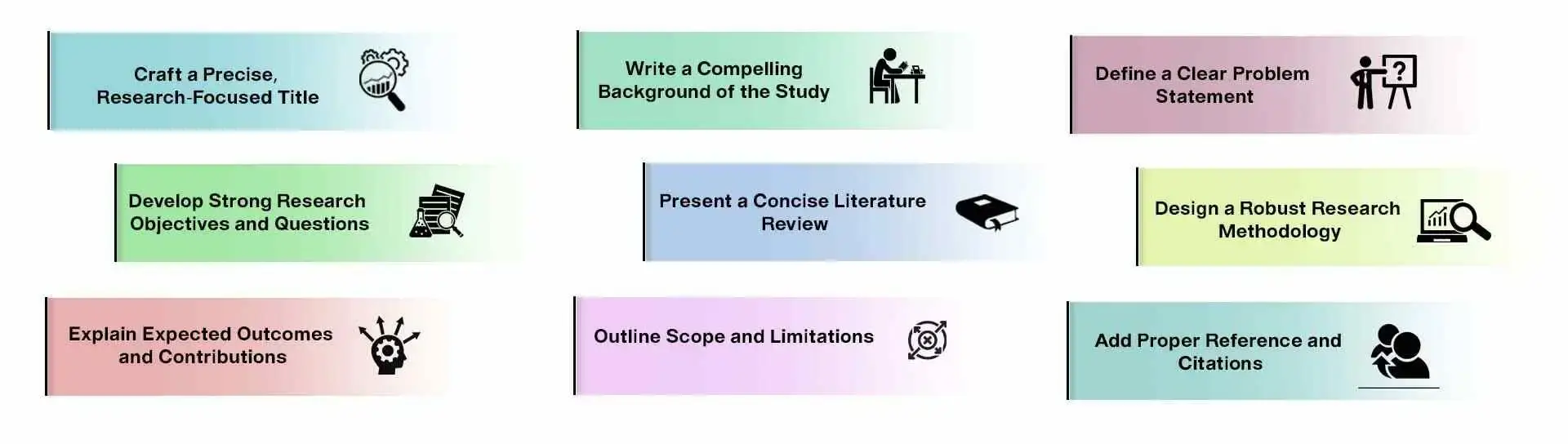
Writing a thesis synopsis can feel challenging, but following a structured approach makes it manageable. This step-by-step guide can explain the essential steps for how to write a synopsis for a thesis and also applies to those preparing how to write a synopsis for a PhD thesis.
Step 1: Craft a Precise, Research-Focused Title
The title of the thesis synopsis should reflect the area of research in focus and should clearly outline the research objectives. A strong title should convey the research direction and help evaluators grasp your study at a glance.
Step 2: Write a Compelling Background of the Study
The synopsis of the thesis should cover the background of the study. It must describe the context and significance of your research. This helps readers understand why the topic matters and what sets the stage for your objectives.
Step 3: Define a Clear Problem Statement
The synopsis should identify and address the research issue within the study. Identify the research issue your study addresses. Ideally, the synopsis highlights the gaps in the current knowledge and shows why your research is necessary by possessing a clear problem statement.
Step 4: Develop Strong Research Objectives and Questions
Research objectives and research questions are the essentials of a synopsis thesis. The research objective and questions presented in the synopsis should align with your problem statement. A good synopsis carries strong research objectives and questions.
Step 5: Present a Concise Literature Review
The undeniable part of a thesis synopsis is the literature review. The literature review summarises the key studies that are relevant to your topic. It should also point out gaps and showcase how your research will contribute to the field.
Step 6: Design a Robust Research Methodology
The thesis synopsis describes the research design, tools, data collection methods, and analysis techniques. This section is focused only on demonstrating the feasibility of your study. A comprehensive research methodology gives a precise thesis synopsis.
Step 7: Explain Expected Outcomes and Contributions
The thesis synopsis highlights what your research is likely to achieve and how it will make a difference within the research community. It should focus on the new knowledge, practical solutions, or research insights in your field.
Step 8: Outline Scope and Limitations
The synopsis of the thesis should provide a realistic view of your study, define the boundaries of your research clearly, vividly mention the research gaps of the study and acknowledge the limitations that are present within your research.
Step 9: Add Proper Reference and Citations
When it is completely accomplished, check whether it follows the academic formatting style that is required for your institution. Accurate citations help you to meet the credibility, and they ensure that the synopsis meets university standards.
Our Expert Tips to Make Your Thesis Synopsis Stand Out
-
Focus on clarity. Stick to what truly matters and avoid unnecessary details that confuse readers.
-
Write with confidence with academic language. Keep your sentence simple with coherence.
-
Make sure your research problem, objectives, and methodology align clearly and logically.
-
Add strong and credible references to make your arguments more convincing.
-
Ensure your writing is concise and precise for a lasting impression on evaluators.
Working on these expert tips helps in the process of how to write synopsis for the thesis.
Get a free consultation
Structuring and Formatting Your Thesis Synopsis for Maximum Impact
Mastering how to write synopsis for a PhD thesis is essential for presenting your research clearly and professionally. Here are some key aspects for structuring and formatting to gain maximum impact
1. Ideal Word Count and Section Distribution
Keep your synopsis concise but comprehensive. Distribute the content logically across each section, like introduction, objectives, methodology, and outcomes. The ideal word count of thesis synopsis ranges from 2,500 to 4,000 words.
2. Formatting Styles (APA, MLA, IEEE, etc.)
Follow the formatting styles that are mandated by the institution, whether APA, MLA or IEEE. Maintain the consistent font, spacing, and citation rules, which are demonstrated for academic professionalism.
3. Use of Headings, Bullet Points and Academic Tone
Organise your synopsis using clear headings and concise bullet points. A professional academic tone helps ensure smooth flow and readability. This approach helps readers to quickly locate key points and understand your objectives.
4.Ensure Readability and Professional Presentation
Use short paragraphs, precise language, and smooth transitions. A professional presentation, free of clutter and grammatical errors, communicates scholarly discipline.
When Should You Consider Expert Support for Writing a Thesis Synopsis?
Knowing how to write synopsis for a thesis is key to academic precision, and expert support can help refine your work, meet deadlines, and ensure professional quality.
Confusing Structure: Seek help. If organising your synopsis feels unclear, it makes it difficult to present your research logically.
Aligning Research Elements: Expert guidance is useful when matching your research gap, objectives, and methodology becomes challenging.
Academic Tone Issues: If you have a hard time expressing your ideas in a strong and professional tone, guidance can make your writing clearer and more impactful.
Facing Tight Deadline: When time is limited or submission pressure is high, experts can help you complete your synopsis efficiently without cutting corners.
Need for Review and Refinement: Professional assistance can help your work through proofreading, formatting and refinement, making sure it meets academic standards.
Why Choosing Ondezx is the Best Way to Strengthen Your Thesis Synopsis
-
Personalized Guidance Tailored to Your Research Domain: Ondezx provides expert advice specific to your field, ensuring that your synopsis aligns with the nuances and expectations of your research area.
-
Structured Support for Every Section of Your Synopsis: From title and objectives to methodology and expected outcomes, Ondezx guides you through each part systematically for a coherent synopsis.
-
Expert Assistance in Refining Research Objectives and Methodology: Our team helps you define precise objectives and choose the right methodology, making your research plan strong and academically credible.
-
Strict Adherence to University Formatting and Academic Standards: Ondezx ensures your synopsis meets all institutional formatting requirements, including APA, MLA, IEEE, or custom guidelines.
-
Enhanced Clarity, Coherence, and Overall Academic Quality: With our support, your synopsis becomes concise, logically organized, and professionally meets the mastery of how to write synopsis for phd thesis and leaving a strong impression on evaluators.
Build a Strong Foundation for Your Thesis
A well-written thesis synopsis is the cornerstone of successful research. By following a structured, step-by-step approach, you can present your ideas clearly, align objectives with methodology, and highlight research significance.
Expert guidance from us helps you to avoid common pitfalls. We ensure your synopsis meets academic standards and strengthen the overall quality of your work. A strong synopsis not only improves your chances of acceptance but also sets the stage for a smooth and confident thesis journey. Investing in professional support can make the difference between an average submission and a compelling, high-impact research proposal.
FAQ's
1. What are the essential components of a thesis synopsis?
A thesis synopsis typically includes the research title, background, problem statement, objectives, research questions, methodology, expected outcomes, scope, limitations, and references, all structured clearly to provide a concise academic overview.
2. How can I improve the quality of my thesis synopsis?
Focus on clarity, logical flow, concise writing, and alignment between the research problem, objectives, and methodology. Use credible references and maintain academic tone throughout.
3. Why is a thesis synopsis important for research scholars?
It provides a structured overview of the study, communicates research intent, highlights originality, and serves as a roadmap for successful thesis completion.
4. Can I get expert help for writing my thesis synopsis?
Yes, our professionals can guide you in structuring, proofreading, and ensuring your synopsis meets academic and institutional standards.




 By Emilia