How to Write References for a Research Paper: A Complete Step-by-Step Guide
In this guide, the various stages involved in how to write references for a research paper are elaborated on in detail. The whole process is made easy for you with the help of different steps that guide you all along the way. The aim is to make sure that you do not get confused throughout your writing process.
Many scholars seek expert assistance because referencing can be challenging. Understanding different citation styles, avoiding plagiarism, and ensuring consistency throughout the paper can often feel overwhelming. With the support of our experienced professionals, your references become properly structured, error-free, and aligned with required guidelines enhancing the overall quality and credibility of your research while saving valuable time.
If you are wondering why scholars choose our research and PhD assistance services, we will explore this in detail below.
What Are References in a Research Paper?
References are essentially the list of sources used while writing a research paper. This can include books, journal articles, or even websites. They are usually placed at the end of the document. Without this section, it becomes difficult to determine the information from, and readers find it hard to verify the content. It also supports credibility and keeps the work aligned with proper academic practice.
Why Are References Important?
References matter in a research paper for a few simple reasons. One of the main things is avoiding plagiarism, since you are showing where the ideas actually come from. It also makes the work more reliable. Readers can check the sources if needed, which builds trust. In a way, it reflects academic integrity and keeps the overall quality of the paper intact.
Common Citation Styles Used in Research Papers
Different subjects follow different citation styles, and each one comes with its own format. Some of the commonly used ones are:
-
APA – mostly used in social science research
-
MLA – commonly followed in humanities subjects
-
IEEE – preferred in engineering and technical fields
Each style has its own way of arranging references, so it is important to stick to the correct format while writing them.
Step-by-Step Guide to Writing References for Research Paper
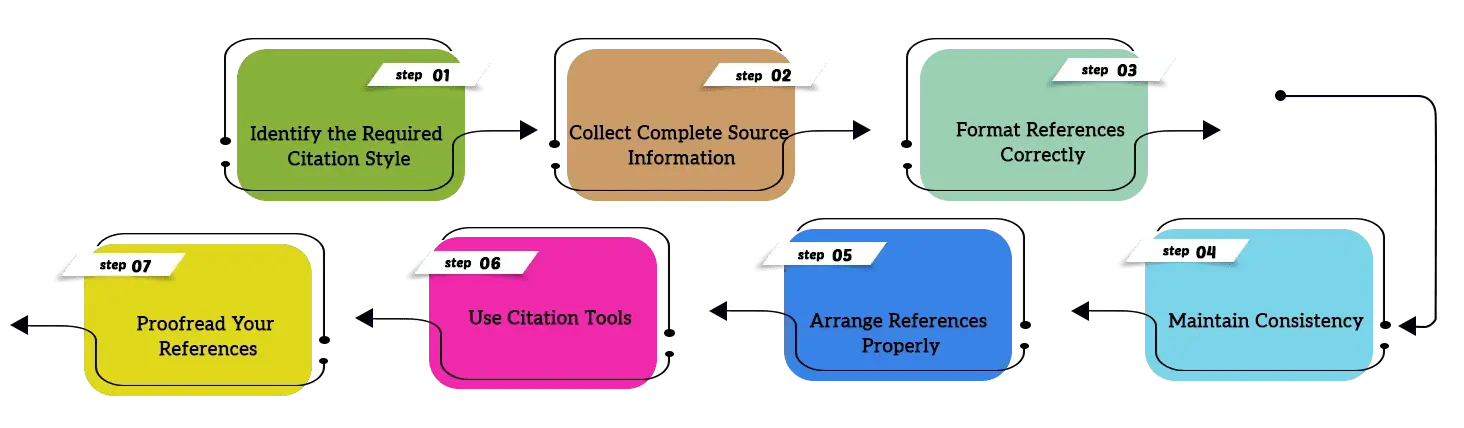
Step 1: Identify the Required Citation Style
Start by checking which citation style your university or journal expects. Knowing this from the beginning saves time later and prevents confusion when formatting references.
Step 2: Collect Complete Source Information
As you research, jot down all the key details like author names, titles, publication years, and publisher information. Having everything ready makes referencing smoother and more accurate.
Step 3: Format References Correctly
Every citation style has its own rules. Arrange the information carefully, paying attention to punctuation and order, so your references appear neat and professional.
Step 4: Maintain Consistency
Stick to the same style throughout your paper. Even minor inconsistencies can make your references look messy, so a uniform approach is important.
Step 5: Arrange References Properly
Depending on your style, you may need to list references alphabetically or use numbering. Correct arrangement helps readers locate sources quickly and easily.
Step 6: Use Citation Tools
Tools like citation generators can save time, but always double-check their output. Automated tools sometimes make small errors in formatting or details.
Step 7: Proofread Your References
Before submission, review all entries carefully. Checking for missing information, typos, or formatting errors ensures your references are accurate and complete.
Common Referencing Mistakes to Avoid
References are one of those areas where carelessness on the part of researchers may significantly diminish the quality of the paper written. While many researchers may unintentionally create referencing errors, others may unknowingly raise questions regarding the credibility of their findings because of such mistakes. Here are some of the most common referencing mistakes made by researchers.
-
Referencing mistakes can easily slip into a research paper.
-
Scholars often miss key details and use the wrong format or mix different citation styles.
-
Incorrect author names, publication years, or titles
-
Including unreliable or outdated sources
-
Failing to match in-text citations with the reference list
-
Taking time to review references improves accuracy and credibility
Tips for Writing Perfect References
Perfect referencing is a key factor when it comes to ensuring the quality of your research paper. Not only does referencing give proper recognition to the original author of an article, but it also enhances the quality of your paper. Here are some tips that will assist you with writing accurate references.
-
Always follow the required citation style and note source details during research.
-
Use reliable academic sources and check formatting carefully.
-
Reviewing references before submission helps maintain consistency and improves overall clarity.
Why Scholars Prefer Ondezx for Academic Assistance
When it comes to academic support, many scholars prefer Ondezx because of the structured guidance offered at every stage. From free IEEE topic suggestions to customized research support, the focus remains on helping scholars meet academic expectations with confidence.
Attention is given to proper formatting, clarity, and accuracy so that every document meets university requirements. Support does not stop with the first draft. Revisions or reviewer corrections and continuous editing are all part of the process. This allows scholars to refine their work without stress.
For those working under time pressure, fast-track delivery options are also available. With consistent guidance and practical support the researchers are able to move forward with clarity and complete their work on time.
Conclusion
We’ve shown how to write references for a research paper in a simple and practical way. Paying attention to details that follow the right format, and keeping your references consistent really helps your paper stand out. Checking each entry carefully when completing one will also prevent mistakes.
Having some guidance can make your whole research process much easier. With our right support, your references stay accurate, original, and match your university requirements. For scholars who want to save time, avoid confusion, and feel confident in their work, getting professional help from Ondezx is a smart choice that keeps things smooth and stress-free.




 By John