How to Make a Thesis Report: A Complete Guide
A thesis report presents every research in a clear and organized way which explains the research problem, objectives, methods, findings, and conclusions of a study. For researchers understanding how to make a thesis report helps present their work in a systematic manner. A well prepared report makes it easier for readers to understand the purpose, process and results of the research. Writing a thesis report must have the following criteria such as careful planning, academic writing, proper organization and accurate formatting.
In this blog, the clear idea of how to structure, write, format and finalize a thesis report is presented step by step so that you can prepare your report with greater clarity and confidence.
How to Make a Thesis Report: Step by Step Process
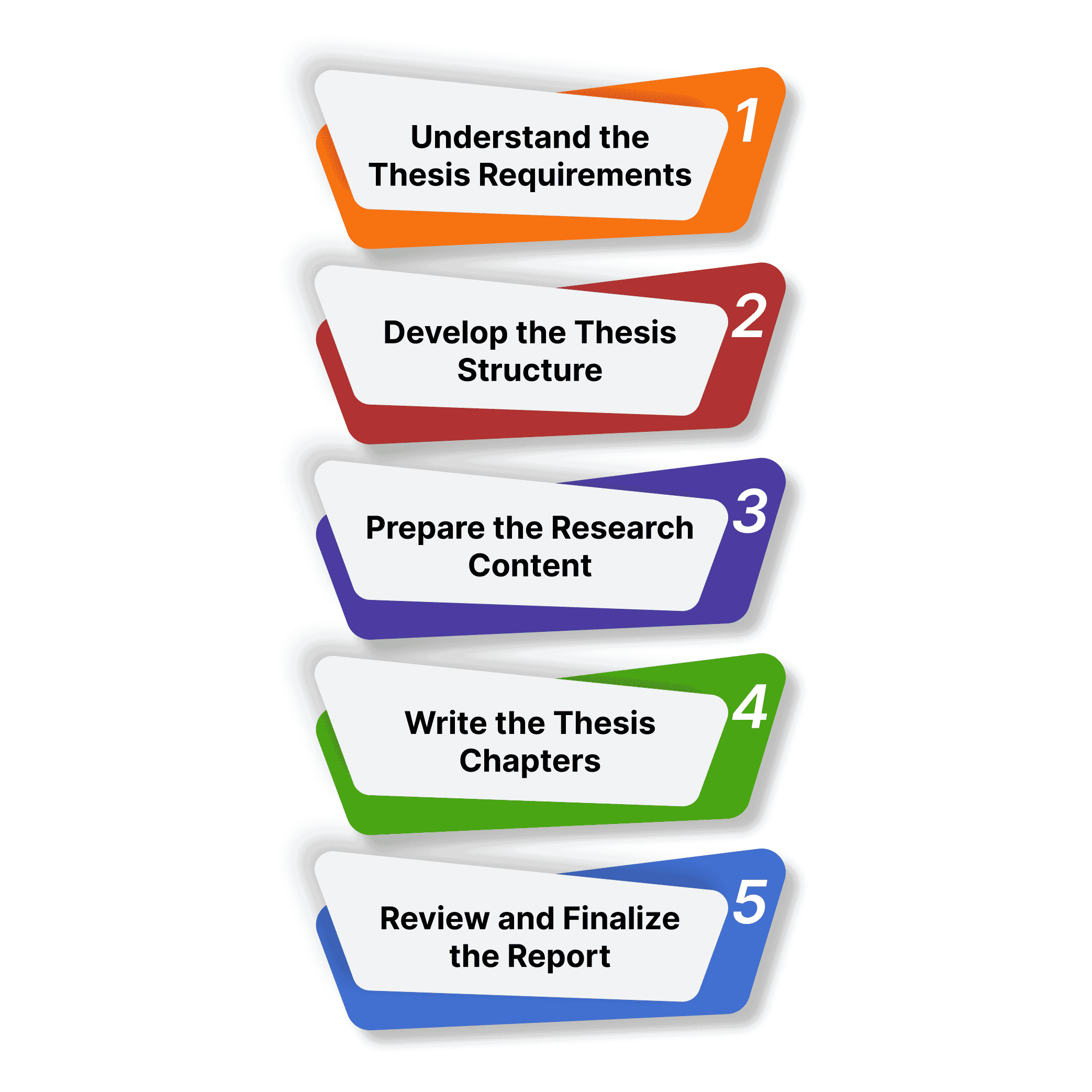
1. Understand the Thesis Requirements
Before starting how to make a thesis report, understand what your university expects. Check the requirements related to your thesis topic, research area, word count, formatting, chapters, references and submission process. This will help you plan your work correctly.
Identify University Guidelines
Several universities may set specific rules and guidelines concerning font, spacing, margin, citations, numbering, layout of chapters and sections, binding and submission details. Pay attention to these requirements and follow them to avoid disapproval.
Determine Required Thesis Components
The essential sections required for your thesis need to be determined which includes the following title page, abstract, introduction, literature review, methodology, findings, discussion, conclusion, references and appendices. Researchers must check for university guidelines for any additional chapters or specific sections.
2. Develop the Thesis Structure
A research with clear structure is easier to understand. When planning how to make a thesis report we need to have an idea on how each chapter will contribute to the overall research. A good structure has logical flow from the introduction to the conclusion.
Arrange the Chapter Sequence
Chapters can be organized logically and appropriately in line with the guidelines provided by your university and the nature of your research.
-
Follow the university guideline: Check your university guidelines for organizing thesis chapters and arrange the chapters according to the instructions.
-
Make a logical sequence: Arrange chapters in a logical manner based on the nature of the research conducted. Usually, Introduction, Literature Review, Research Methodology, Findings and Discussion and Conclusion are common chapters used for different studies.
-
Maintain consistency within the chapters: Make sure that the chapters are consistent with respect to research problems, objectives, questions, methodology, findings and discussion.
-
Adopt a structure based on your research: The structure of the thesis may vary depending on the nature of the study.
Define the Purpose of Each Chapter
Each chapter should have a clear purpose. The introduction presents the research background and objectives. The literature review discusses previous studies. The methodology explains the research process. The findings present the results while the conclusion summarizes the major outcomes.
3. Prepare the Research Content
The content of a good research work forms the basis for a strong thesis. To create such content researchers need to clearly define the research problem, objectives, supporting studies, methodology, data and findings before starting to write the chapters. This will make the writing process easier and avoid unnecessary repetitions.
Define the Research Problem and Objectives
Clearly explain the problem your research addresses. Then state the research objectives in a direct and measurable way. The objectives should guide your study and remain connected to the research questions, methodology, findings and conclusion.
Develop the Literature Review
Review relevant books, journal articles, research papers, and other reliable academic sources. Identify important theories, previous findings, research gaps and areas related to your study.
You can also learn more from our blog on “How to write a literature review.”
Establish the Research Methodology
The research methodology used in the study must be explained. The research design, data collection methods, participants or samples, tools, procedures and methods of analysis need to be described. The methodology should provide enough information for readers about the conducted research.
Present the Research Findings
Next, present your research findings. At this stage, you need to provide objective information about your research results using tables, figures, charts, or other means of presentation, if necessary. Remember not to include any unwarranted assumptions or conclusions while presenting the research results.
4. Write the Thesis Chapters
Once you have completed the research content, it is time to start writing the chapters one by one. To a researcher, learning how to prepare a thesis report is not only about following the format but also about conveying ideas clearly and supporting assertions with facts and maintaining an academic flow of the document.
Develop Each Chapter
Write every chapter with a clear purpose and logical organization. Use clear, evidence-based academic content to support your arguments. Unnecessary information and repetition shouldn't be present. Each section should specify the research objectives and readers must understand your study.
Maintain Logical Connections Across Chapters
There must be logical connections between the objectives, methodology and research results, as well as analysis and conclusion in order to maintain the consistency and coherence of your thesis. The research results will reflect your objectives while the analysis and conclusion will present your results accurately.
5. Review and Finalize the Report
The final review should be carefully checked before the thesis is submitted. The complete document should be carefully checked for its content, language, structure, references and formatting. This will make sure that the report is clear, accurate and ready for submission.
Check Academic Accuracy and Coherence
The thesis must have a regular consistency, clarity, and factual accuracy. The research objectives, arguments, evidence, findings and conclusions should be in a consistent way. Any vague, unsupported, or irrelevant statements have to be removed.
Correct Language and Formatting Issues
The manuscript needs to be reviewed for mistakes for grammar, spelling, punctuation, sentence structure, headings, tables, figures, citations and references. The document formatting must follow the guidelines. A final language check of your thesis can also improve the overall presentation and professionalism of your thesis.
Verify Compliance With Guidelines
Perform a final check against your university requirements. Check the required format, chapter sequence, citation style, page numbering, word count, declarations, certificates and submission instructions. Avoid format related corrections at the time of submission with this additional step.
If you find it difficult to make a thesis report or get stuck halfway through your report you can reach out to professional thesis support for guidance.
How Ondezx Helps You With Thesis Report Preparation
Thesis Structure and Content Support
At Ondezx our support team helps you with the organization of your thesis structure and research content. The support focuses on creating a coherent structure of chapters while ensuring that the content supports your research objectives.
Academic Review and Refinement
Academic editing can also assist you in identifying areas in your thesis that need improvement in terms of explanation, organization and supporting details. You can also fine-tune your content to meet the standards of academic writing.
Final Quality Check
A final quality check can help you identify any language, formatting, consistency, citation and structural issues prior to submission. You'll receive one extra review of your completed thesis before submission.
Research Organization and Guidance
Research materials can be overwhelming and difficult to manage during a long project. Proper guidance can help organize your research information, supporting sources, objectives, findings and other relevant information in a systematic manner.
Formatting and Academic Compliance Support
While thesis preparation following the university formatting rules is an important part. Professional support can be obtained for checking formatting, references, headings, tables, figures and other academic requirements before final submission.
Conclusion
A thesis report needs to be prepared according to the guidelines given by the university, collecting the research work undertaken and compiling a comprehensive manuscript in chapters and final proofreading. A clear structure, academic accuracy, consistency, and proper formatting are essential to present your research with clarity and professionalism. If you feel stuck at any stage of your thesis report, expert guidance can make the process smoother. To get professional thesis help and editing services, connect with us at Ondezx.




 By John