How to Write a Conference Paper That Meets Academic Research Standards
A conference paper is a document used for presenting study results, methods, data and research's scholarly contribution to the research field. To write a Conference Paper, researchers should maintain good academic quality while following the specific guidelines given by the conference. The paper should have a well defined structure, reliable research, proper formatting, supporting evidence, accurate citations and a neat presentation. It should be able to present research findings, methodology, evidence and results in a clear manner to the research audience. Conference specific requirements may include the manuscript's format, length, sections and references.
In this blog you will learn how to develop, structure and present a conference paper while meeting academic and conference requirements, research quality and citation standards.
How to Write a Conference Paper: Step by Step Process
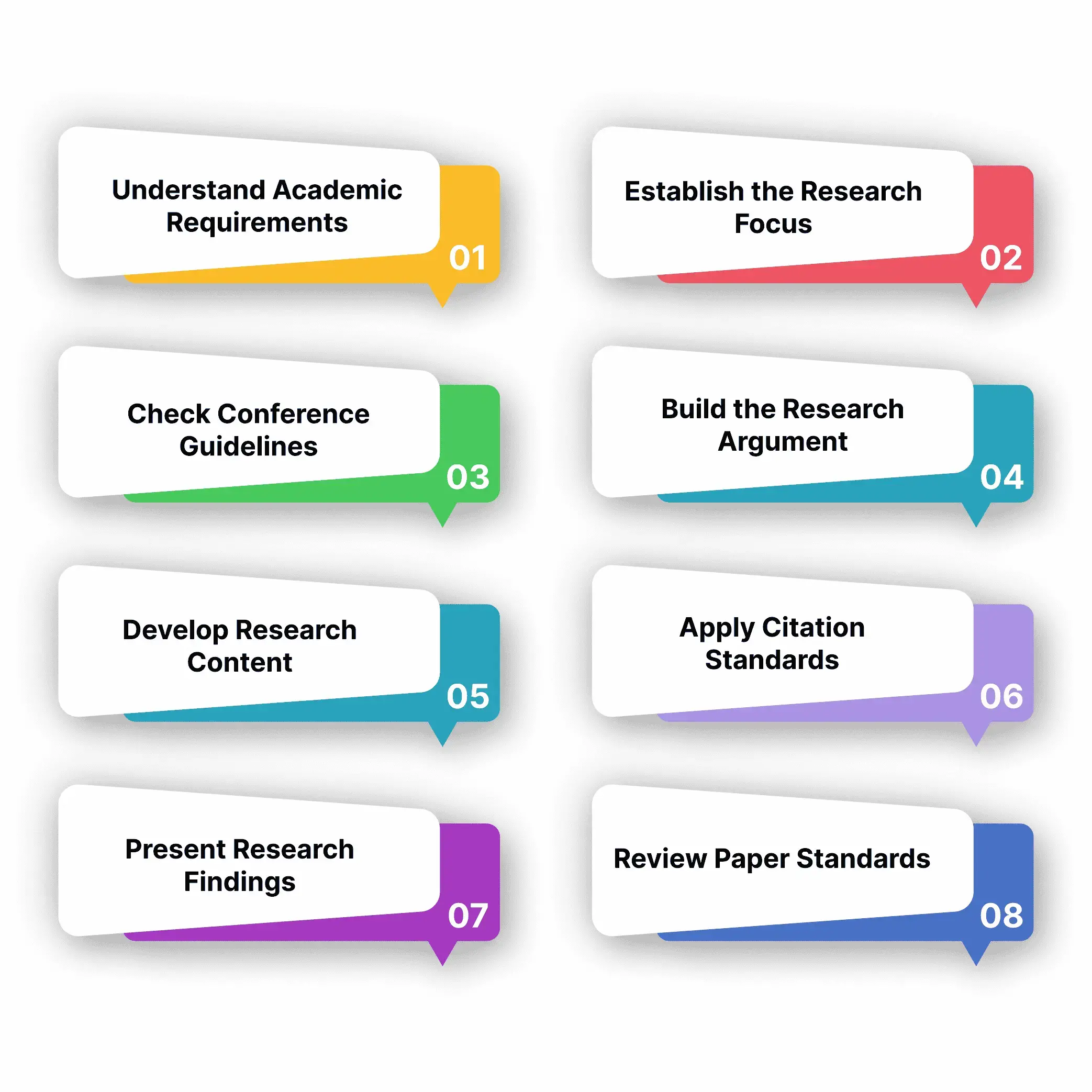
Step 1: Understand Academic Requirements
Researchers have to understand the general academic standards that are expected in a conference paper which are research quality, scholarly writing, reliable evidence, logical structure, appropriate citations and neat presentation of the research.
Step 2: Establish the Research Focus
A correct research focus is very important in writing a conference paper because it keeps the study connected to its central problem and objectives.
It helps keep the paper relevant and connected. It guides the problem, objectives, questions, contribution, methodology, analysis and findings throughout the paper.
Define the Research Problem
The research problem needs to be stated correctly and the issue which the study addresses has to be explained. The problem should be specific, relevant and supported by existing research or evidence. A well defined problem helps establish why the study is needed and provides direction for the rest of the conference paper.
Set the Research Objective
The research objective should be directly related to the research problem as it defines the direction of your study. Specific objectives help the researcher to stay focused while deciding upon the methodology, gathering evidence, analyzing results and presenting your contributions.
Define the Research Question
Research questions should be formulated in such a way that they address the problem identified. The questions should be specific enough to provide direction to the study while being able to relate to the research objectives.
Establish the Research Contribution
The research must explain and add to the existing academic discussion. The contribution may involve new findings, an application of an approach, an analysis of existing evidence or another meaningful insight. It should be clearly connected to the research problem, objectives and findings.
Step 3: Check Conference Guidelines
Understanding the university and conference guidelines prior to finalizing the paper is essential to ensure a successful submission and publication of the study. The guidelines usually provide the general rules regarding the paper’s structure, formatting, length, components, and citation style that the manuscript should follow.
Therefore, it is vital to go through the requirements given below and understand them thoroughly before developing the paper.
Conference Template and Formatting Rules
Conference templates such as IEEE, ACM and Springer have their own font, font size, headings, spacing, margins, page layout, figures, tables and reference style. The applicable template must be followed consistently in the manuscript.
Word Count and Manuscript Length
Check the specified manuscript word count or page limit before writing. The conference may define a maximum or permitted number of words or pages. Keep the complete paper within the stated limit without removing important research information or weakening the overall academic structure.
Required Paper Components
Researchers must review the required sections and components listed by the conference. They are the abstract, keywords, introduction, methodology, results, discussion and conclusion, reference list, author information, figures, tables or other items. Research authors must structure the required sections and subsections in the order and format specified.
Step 4: Build the Research Argument
A strong conference paper should connect every section to one clear research argument. Every section must support the research problem, objectives, evidence, findings and contribution.
-
Introduction: This section must give the overall idea of research context, problem, objectives, questions and purpose so that the reader understands the direction of the study.
-
Literature or Background: Explanation of relevant scholarly work must be done to establish the research context and how it is related to existing knowledge.
-
Methodology: This section should demonstrate about the research conducted and the justification for selected methods to answer the research questions.
-
Findings and Discussion: Here the evidence and findings are presented and their relation to the research problem and existing studies are explained.
-
Conclusion: This section summarizes the key findings and contribution without introducing unrelated new information.
Step 5: Develop Research Content
Research content should be precise, relevant and supported by credible scholarly evidence. Claims should not be presented as unsupported statements. Use appropriate academic sources, research findings, data and evidence to explain important points. The discussion should remain connected to the research problem, methodology, analysis and objectives.
Step 6: Apply Citation Standards
Accurate citations and references are a good practice for the academic credibility of a conference paper and acknowledge the sources used. The citation style required by the conference has to be followed throughout the manuscript. Cited sources must appear in the reference list and those references must be complete, relevant and presented in the required format.
Step 7: Present Research Findings
The researchers must present tables, figures, statistical results and written findings clearly and consistently. Each presentation should relate to the research methodology and help readers understand the evidence and results without unnecessary complexity.
Step 8: Review Paper Standards
Your completed paper should be evaluated against academic and conference guidelines. Care should be taken to follow the prescribed guidelines for research content, evidence, citations, references, word count, required sections, figures, tables and overall presentation before submission.
If you have written your conference paper but need professional support with the final review we can review and refine your paper to ensure it meets academic standards and conference specific requirements before submission.
How Ondezx Supports You in Conference Paper Preparation
Research Structure and Academic Content Support
Our team supports in organizing the research structure and present academic content in a clear, logical, and consistent manner.
Methodology and Research Presentation Review
Our experts can review methodology and research presentation to improve clarity, consistency and connection with the research objectives and findings.
Citation and Reference Verification
At Ondezx our support team can check for citations and references to maintain consistency, completeness and alignment with the applicable conference citation requirements.
Academic Editing and Manuscript Refinement
Researchers can obtain our guidance for manuscript preparation which has academic clarity, grammar, structure, readability and consistent presentation while retaining the intended research meaning.
Final Conference Paper Quality Check
We also do a final review check for manuscript against conference requirements, formatting instructions, academic standards and specified submission components.
Conclusion
Understanding how to write a conference paper assists researchers to present their work effectively and appropriately. A conference paper should be written up, to present a suitable research argument, relevant evidence, relevant methodology, key findings and contribution to the field. The conclusion should tie these together to highlight the importance of the research undertaken and not present new information. We can assist the review and revision of the conference paper, improve academic clarity, strengthen the conclusion and prepare the final manuscript according to conference requirements.



 By John